Wealth isn’t measured by how much money you earn. It’s measured by what you do with the money you earn.
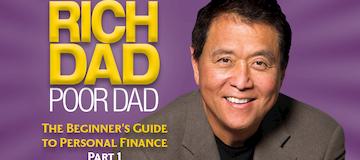
There is a line in this book that has stayed with me: rich people make money work for them. Poor people work for money.
Read that again. Most of us are conditioned from a young age to get a good job, earn a good salary, and that’s the goal. But Robert Kiyosaki argues that this thinking is exactly what keeps people in the cycle. You are not building wealth by trading time for money. You are just surviving.
Use your head, not just your hands
The first shift this book pushes you to make is a mental one. Instead of asking “how do I earn more?”, start asking “how do I make what I have work harder?”
That means financial planning. Understanding assets and liabilities. Not just complaining that the salary isn’t enough, but working out what to do with what you’ve got.
Assets over everything
Kiyosaki is clear: acquiring assets is the best route to building wealth. An asset puts money in your pocket. A liability takes money out. The trap most people fall into is buying things that feel like assets (a bigger car, a bigger house) when they are actually liabilities.
His example that stuck with me: it’s better to live in a small house for five years, own it outright, and use it as a foundation to invest and grow, than to sell quickly and chase a bigger home. The small house becomes an asset. Patience turns it into leverage.
Broke is not the same as poor
One of the most honest lines in the book: being broke is temporary, being poor is eternal.
Broke is a financial state. Poor is a mindset. You can be broke today and rich in five years if you are making the right decisions now. But if you stay in a poor mindset: spending everything, avoiding risk, waiting for someone to sort it out, the situation becomes permanent.
Managing fear and greed
Kiyosaki talks a lot about the two emotions that drive most financial decisions: fear and greed. Fear stops people from investing. Greed pushes them into bad decisions when things are going well.
The discipline is managing both. Not letting fear keep you from building, and not letting short-term gains distract from long-term goals.
How wealth actually grows
The book points toward several ways to build income-generating assets: investing in start-ups and small businesses, real estate, investment partnerships, and backing ideas with potential. None of these are overnight wins. All of them require patience, research, and a willingness to take calculated risk.
Partnership is highlighted as one of the smarter moves: sharing risk, combining knowledge, and moving faster than you could alone.
The takeaway
This book won’t make you rich. But it will change how you think about money, and that is the first step. The shift from “how do I earn more?” to “how do I build more?” is not small. For most people, it’s the difference between a salary and a legacy.
Worth reading. Worth revisiting.