I grew up not knowing I was poor. I left everyone I loved at 20 with nothing but a plane ticket. Now I’m a father, and there are things I’ve never said out loud about what that means for my kids.
I grew up in a below middle-class neighbourhood in Portmore, Jamaica. My mom left education at 13, my dad at 11; he was the oldest boy and had to work to support the family. Despite that start, they worked hard enough to buy a small two-bedroom house in Southborough. I grew up with one brother and three sisters, sharing everything, and as a child I was happy. I didn’t know we were poor until I was 8.
I found out when I visited a friend whose parents were a dermatologist and a senior accountant. He lived in a four-bedroom house and was an only child. We ended up at the same primary school by chance. What I learned that day has stayed with me: the cards you’re dealt determine your starting position. Education or sport was the only way out of mine.
I worked with what I had. At high school I pooled money with friends to share meals and got second-hand books from older students at a fraction of the cost. But university wasn’t realistic. In Jamaica, only 3% of the country could access it, and scholarships went to athletes and the exceptionally gifted. That wasn’t my community.
So at 18 I went to work as an accounts payable clerk at the National Water Commission, a job that paid enough for the bus back and lunch, with a little left to help with a household bill. That could have been where my story ended.
But people saw something in me. I saved up airfare, borrowed a month’s college fees from my dad, and at 20 left everything I knew to come to England. Strangers gave me a place to stay while I worked and studied. The numbers barely added up: £500 a month working a call centre and stocking shelves at night, £400 in college fees, £100 left for everything else.
These are my humble beginnings.
Most parents want better for their children than they had themselves. My parents would say they achieved that. Now that I’m a parent, I understand how true that is, and how hard it is to deliver on. Faith, circumstances, luck, the cards you’re dealt; they all have a say. Great family, good friends, a good education, money; none of it guarantees anything.
Some say growing up with nothing is actually an advantage; it makes you hungrier, less likely to take things for granted.
Hold that thought.
Eighteen years in England. Here’s what I know: there’s only so far you go alone. What I want is to support my family so they can reach their goals, to give them the platform to do what they want with their lives.
It’s that simple.
Being a Black man, you face prejudices. Some are obvious enough to navigate around. The silent ones, institutionally ingrained and rarely named, are harder. And yes, sometimes they stop you from progressing.
The chips don’t stack up in a Black man’s favour. The higher up we go, the tougher and lonelier the road gets.
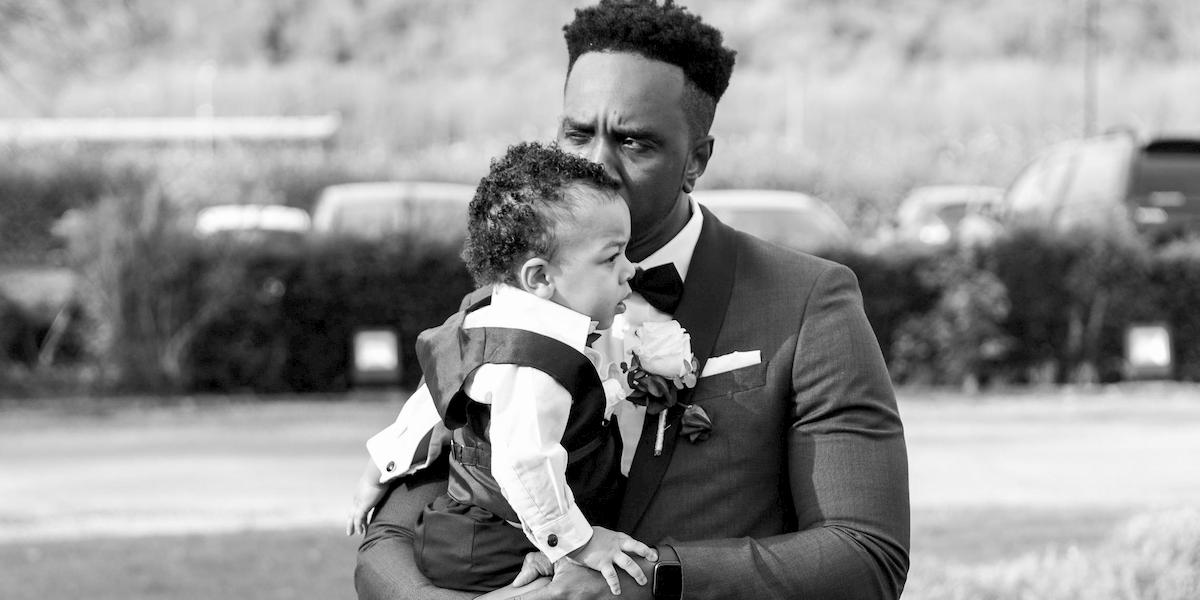
My sons, Danté and André, will walk that road too. Despite being mixed-race, they won’t be seen that way; they’ll be thought of as Black boys, or mixed at best. People form assumptions from social media, from the news, from a lack of education, or simply from fear of where you come from and how you came into this world.
I want to counter that with a head start: better education, a stronger support network, an environment where the people around them have a more progressive mindset. Why try to do it alone when everything in my life has shown me that people who help you remove barriers you could never clear by yourself? I believe in it and I live by it: it takes a community to raise a child.
No one truly wants to leap into the unknown. We could all stay where we are and deal with circumstances as best we can. But it’s against my nature. Leaving the family I grew up with, venturing into an unknown world at 20; that brought me here.